


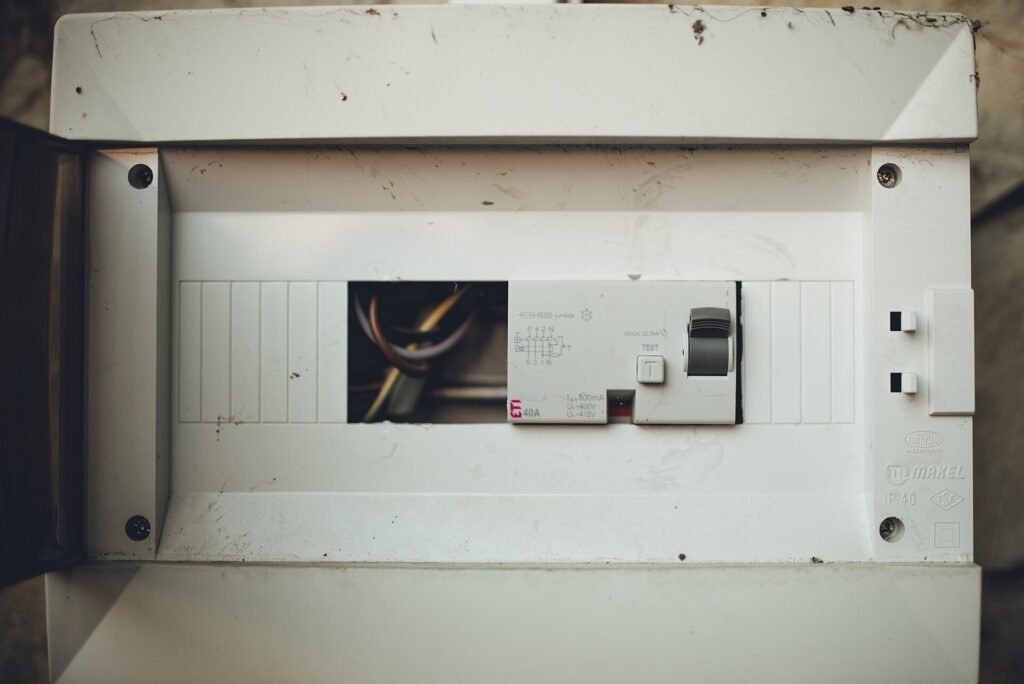
An electrical panel upgrade replaces your home’s breaker panel, and often raises its amperage, so it can safely handle today’s loads. Common reasons include frequent breaker trips, an old fuse box or suspect panel, no space for new circuits, or a new EV charger or heat pump. A licensed electrician sizes it with a load calculation and pulls a permit.
This guide explains the warning signs, the difference between a panel replacement and a service upgrade, how 100 and 200 amp service compare, and what to expect from permits and the utility. For help choosing a contractor, see our main guide on how to hire an electrician.
What are the signs you need an electrical panel upgrade?
Some signs point to a capacity problem. Others point to a safety problem that needs attention soon. Call a licensed electrician if you notice any of these:
- Breakers that trip often or fuses that blow when several appliances run at once.
- A panel that feels warm, buzzes, crackles or smells like burning plastic.
- Scorch marks, rust or water inside or around the panel.
- No open spaces for new breakers, or many tandem breakers squeezed in to make room.
- Lights that dim when a large appliance starts.
- An old fuse box or a panel brand your home inspector or insurer has flagged.
- A big new load on the way, such as an EV charger, heat pump, electric range or hot tub.
A hot panel, burning smell, sparking or scorch marks are not upgrade-planning signs; they are safety problems. Stop using the affected circuits and have a licensed electrician inspect the panel as soon as possible.
Panel replacement or service upgrade: what is the difference?
The two terms are often used as if they mean the same thing, but they are different jobs.
A panel replacement swaps the breaker panel for a new one at the same amperage. It fixes a worn, damaged or suspect panel, or adds breaker spaces, without changing how much power the utility delivers.
A service upgrade raises the capacity of the whole service, for example from 100 to 200 amps. It usually includes a new main panel, new service entrance conductors, a new meter base and sometimes a larger utility connection. Because the utility’s equipment is involved, it takes more coordination and usually costs more than a panel swap.
Some jobs fall between the two, such as adding a subpanel for a garage or basement. A subpanel adds spaces, but it does not add capacity to the service.
Is 100 amp or 200 amp service right for your home?
The National Electrical Code (NEC) sets a floor: the service disconnect for a one-family dwelling must be rated at least 100 amps, under section 230.79(C). Many older homes have exactly that, and some have even smaller services installed under older rules.
Whether 100 amps is enough depends on what the house runs. A home with gas heat, a gas range and a gas water heater may do fine. A home with electric heat, a heat pump, an electric range, an electric dryer and an EV charger may not. That is why 200 amps has become a common choice for all-electric homes and service upgrades, and why some homeowners ask about larger services.
Future plans matter too. If you expect to add an EV charger, a heat pump or a hot tub within a few years, tell the electrician now. Sizing the service once usually makes more sense than upgrading twice.
Bigger is not always necessary, though. A load calculation tells you what the home actually needs, and it can show that a well-planned 100 or 150 amp service is enough, or that load management is a cheaper path than a larger service.
How does a load calculation work?
Electricians size services and panels with the load calculation rules in the NEC. Through the 2023 edition these are in Article 220. In the 2026 edition they moved to a new Article 120 with mostly the same section numbers, according to the International Association of Electrical Inspectors. Your inspector will use whichever edition your state or city has adopted.
For an existing home, two methods are common:
- Calculated method (220.83 in the 2023 NEC): the electrician adds up general lighting and receptacle loads, fixed appliances, heating or cooling and the new load, then applies demand factors set by the code.
- Measured method (220.87): the electrician uses the home’s actual peak demand from a year of utility data, or at least 30 days of recorded data, multiplies it by 125 percent and adds the new load.
New loads have set values. For example, the 2023 NEC counts an EV charger at 7,200 watts or its nameplate rating, whichever is larger. Newer editions also let an energy management system limit the calculated load in some cases, which can make room for a charger or heat pump without a service upgrade. Ask your electrician which method they used and to show you the result.
Are Federal Pacific and Zinsco panels a problem?
Federal Pacific Electric (FPE) Stab-Lok breakers were the subject of a Consumer Product Safety Commission investigation that began in 1980. In 1983 the CPSC closed the investigation, saying the data available did not establish that the breakers posed a serious risk of injury. The agency stressed that it closed the matter without determining whether the breakers are safe, and a 2011 revision repeated that point.
In other words, the CPSC neither declared FPE panels safe nor ordered a recall. Many home inspectors and some insurers still flag them. Zinsco panels are flagged by some inspectors too, but we found no federal safety finding on them.
The practical step is the same for any older panel: have a licensed electrician inspect it. Signs of heat damage, loose breakers or breakers that do not trip are reasons to replace the panel whatever the brand.
Do you need a permit for an electrical panel upgrade?
Yes. Panel replacements and service upgrades need an electrical permit and inspection almost everywhere, and the licensed electrician should pull it. Our guide to electrical permits and inspections explains the process.
Service work also involves your utility. The typical steps are:
- The electrician runs the load calculation and applies for the permit.
- The electrician contacts the utility to schedule a disconnect and, for a service upgrade, to confirm the size of the new connection.
- On install day, the utility cuts power and the electrician replaces the panel, meter base and service conductors as needed.
- The inspector checks the work. Many places, including Dayton and Toledo in Ohio, require approval or a release before the utility reconnects service.
- The utility restores power and installs or reconnects the meter.
A new panel is installed to the code in force, not the one your old panel met. Depending on the edition your area uses, that can mean an outdoor emergency disconnect, whole-home surge protection at the service, and more AFCI and GFCI breakers. Michigan, for example, requires the emergency disconnect for one- and two-family homes in a readily accessible outdoor location. These items affect the quote, so ask about them up front.
How much does an electrical panel upgrade cost?
We do not publish a price range because we have not found a current, official source for one, and costs vary widely by region and job. The biggest factors are whether you need a panel swap or a full service upgrade, whether the utility connection or meter base must change, how far the panel moves, how many circuits need AFCI or GFCI breakers, and local permit fees.
Get at least three written quotes that describe the same scope, including amperage, panel brand, number of spaces, surge protection and permit fees. If you are planning an EV charger, read our home EV charger installation guide first, since the charger may be the reason for the upgrade.
Compare electricians for panel upgrades
An electrical panel upgrade is not a job to choose on price alone. Look for a licensed contractor who does a real load calculation, handles the permit and utility coordination, and explains what the new code requires. You can browse electricians who list panel upgrades, such as panel upgrade electricians in Ohio, or get 3 free quotes from local electricians.

Missouri Electrician License and Permit Rules (2026)·
[…] core, where aged wiring and small services often need updating before new loads are added. Our electrical panel upgrade guide explains that […]
Wisconsin Electrician License, Permits and New Code·
[…] many older homes, where panel and wiring updates are common. Before you replace a panel, read our electrical panel upgrade guide, and ask how the 2023 NEC rules affect your […]
Whole-Home Surge Protection: NEC 230.67 and SPD Types·
[…] equipment, the new installation needs an SPD even though the house was built long before 2020. Our electrical panel upgrade guide explains when a service change makes […]
Home Standby Generator Guide: Sizing, Fuel and Safety·
[…] condition: an old or full panel may need work first. Our electrical panel upgrade guide covers the warning […]