


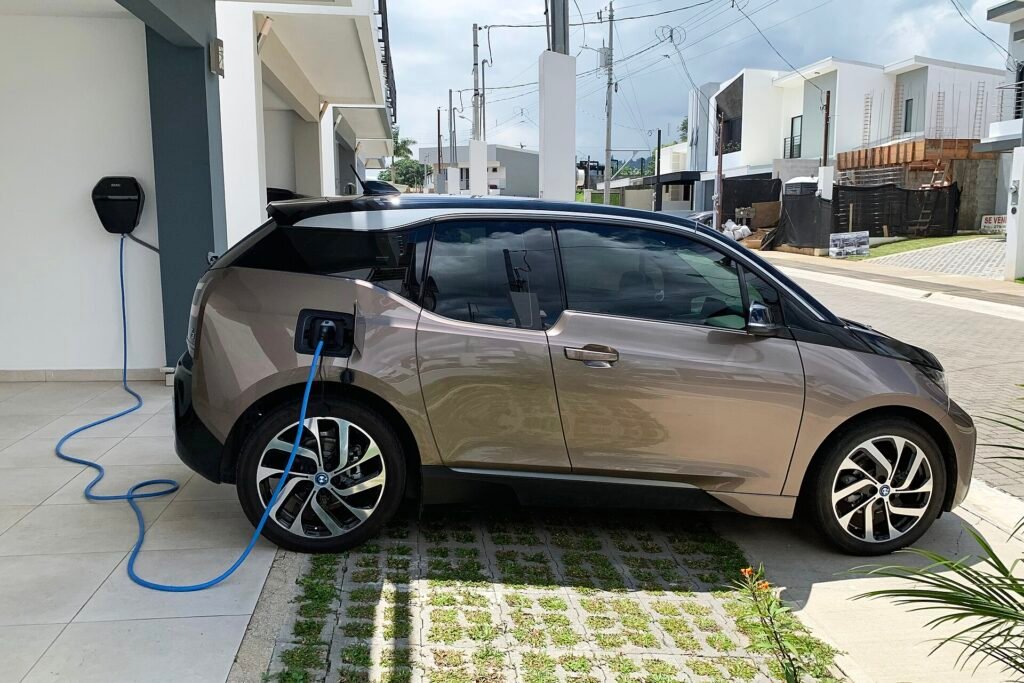
Home EV charger installation usually means adding a Level 2 charger on a dedicated 240-volt circuit. A licensed electrician checks your panel’s capacity with a load calculation, sizes the circuit at 125 percent of the charger’s current as the National Electrical Code requires, pulls the permit and schedules the inspection. Level 1 charging needs only a standard outlet.
This guide covers the choice between Level 1 and Level 2, how circuits and panels are sized, permits and incentives. For help choosing a contractor, start with our guide on how to hire an electrician.
Level 1 vs Level 2: which home EV charger do you need?
According to the Department of Energy’s Alternative Fuels Data Center, the two home charging levels compare like this:
| Level 1 | Level 2 | |
|---|---|---|
| Voltage | 120 V AC outlet | 240 V in homes (208 V is typical in commercial buildings) |
| Typical power | About 1.9 kW | Up to 7.2 kW for most home units at 30 amps; 2.9 to 19.2 kW overall |
| Range added | About 5 miles per hour of charging | About 25 miles per hour of charging |
| Installation | Standard outlet, ideally on a dedicated branch circuit | New 240 V circuit, hardwired or on a receptacle |
Level 1 can be enough if you drive short distances and park at home overnight. Most drivers who rely on home charging choose Level 2, especially for longer commutes, larger vehicles or two EVs in one household.
What size circuit does an EV charger need?
The rules are in Article 625 of the National Electrical Code (NEC). Two points drive most installations:
- Individual branch circuit (625.40): an outlet for EV charging equipment rated over 16 amps or over 120 volts needs its own branch circuit, not one shared with other loads. Recent editions allow exceptions when an energy management system controls several chargers.
- 125 percent sizing (625.41): EV charging is a continuous load, so the breaker and wiring must be rated at least 125 percent of the charger’s maximum current.
In practice, a charger that delivers 32 amps needs at least a 40-amp circuit, a 40-amp charger needs a 50-amp circuit, and a 48-amp charger needs a 60-amp circuit. Many Level 2 chargers have an adjustable current setting, which lets an electrician match the charger to a smaller circuit or to the capacity your panel has left.
Hardwired or plug-in?
A Level 2 charger can be hardwired or plugged into a 240-volt receptacle. The NEC requires GFCI protection for receptacles used for EV charging, and a hardwired unit avoids a receptacle altogether. Your electrician can explain the tradeoffs for the charger you choose and the edition of the code your area enforces.
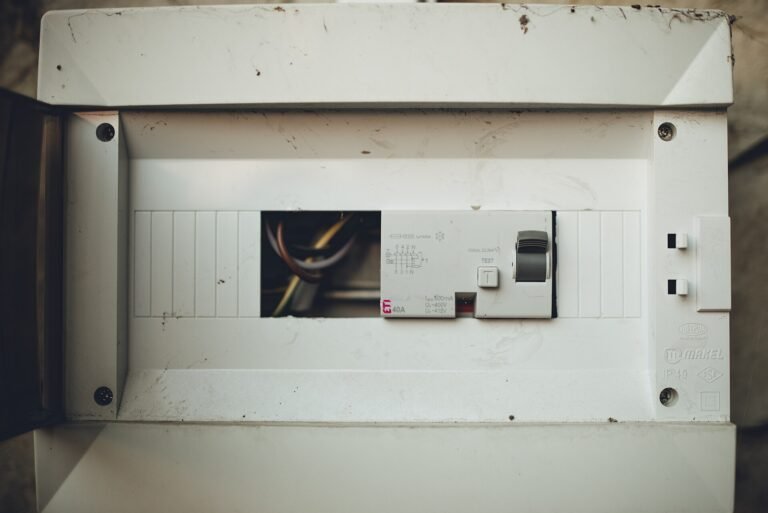
Does your electrical panel have enough capacity?
This is the question that most affects cost. A charger adds a large, long-running load, and your service has to carry it along with heating, cooling, cooking and everything else.
Your electrician answers it with a load calculation. The 2023 NEC counts an EV charger at 7,200 watts or its nameplate rating, whichever is larger, and adds it to the home’s calculated load. Another option uses a year of your actual peak demand from utility data, multiplied by 125 percent, plus the new charger.
If the numbers do not work, you have three main options:
- Use a lower charger setting so it draws less current, if that still meets your daily driving needs.
- Add load management. Recent NEC editions allow an energy management system to limit charging so the total load stays within the service rating. Some chargers include this feature, and separate devices can pause charging when the dryer or range runs.
- Upgrade the panel or service. Our electrical panel upgrade guide explains service upgrades, 100 vs 200 amp service and utility coordination.
Ask each electrician to show you the load calculation behind their recommendation. If one quote includes a service upgrade and another uses load management, the calculation shows why.
Do you need a permit for EV charger installation?
In most places, yes. The Alternative Fuels Data Center notes that charging installations must follow local and state codes and that permits may be required from local building authorities. Cities in our directory are explicit: Ann Arbor, Michigan, Cincinnati, Ohio, and Evansville, Indiana, all list EV chargers among jobs that need an electrical permit.
The licensed electrician should pull the permit, and the inspector checks the circuit, breaker size, wiring method and mounting before you start charging. Our guide to electrical permits and inspections explains the process.
How do you choose a home EV charger?
Match the charger to your vehicle, your driving and your electrical capacity. Look at:
- Safety certification. ENERGY STAR warns that not all EV chargers for sale are safety certified. Choose one listed by a nationally recognized testing laboratory.
- Efficiency. ENERGY STAR certified chargers use 40 percent less energy in standby mode, and chargers sit idle much of the time.
- Current rating and adjustability. A charger that can be set to a lower current gives you more options if panel capacity is tight.
- Connector and cable length. Make sure the connector fits your vehicle and the cable reaches where you park.
- Smart features. Networked chargers can schedule charging and may qualify for utility programs.
Where should you install a home EV charger?
Location affects both cost and convenience. A short run from the panel to an attached garage usually means less wire and labor than a long run to a detached garage or a driveway post, which may need trenching and outdoor-rated equipment.
Think about where the charging port is on your car and how you park. A cable that has to stretch across a walkway is a tripping hazard and wears faster. If you may own a second EV later, ask whether the location and circuit could serve two vehicles, for example with a charger that shares power between two cars.
Outdoor chargers must be rated for wet locations, and the installation has to protect the wiring from damage. If the job involves digging, the contractor should call 811 first so buried utility lines are marked.
Is there a federal tax credit for home EV chargers in 2026?
Not for new installations. The federal Alternative Fuel Vehicle Refueling Property Credit (section 30C) covered home charging equipment placed in service at your main home from January 1, 2023, to June 30, 2026, according to the IRS. A charger installed after June 30, 2026 does not qualify.
If your charger was placed in service by June 30, 2026, you may still be able to claim it on your tax return. The credit was 30 percent of the cost, up to $1,000 per item, and only in eligible low-income or non-urban census tracts. You claim it on IRS Form 8911, and the IRS page explains how to check your census tract.
State governments and utilities run their own rebates and time-of-use rates, and these change often. The Alternative Fuels Data Center keeps a searchable database of state and utility incentives, and your utility can tell you about its current programs.
What happens on installation day?
- The electrician confirms the charger location, the circuit size and the route from the panel.
- Power is shut off at the panel, and a new breaker and wiring are installed.
- The charger is mounted and connected, or a 240-volt receptacle is installed for a plug-in unit.
- The charger’s current setting is matched to the circuit, and the circuit is labeled in the panel.
- The inspector checks the work, and the electrician tests the charger with your vehicle.
Compare electricians for EV charger installation
A good EV charger installation starts with a load calculation, not a sales pitch. Look for a licensed contractor who explains your panel’s capacity, sizes the circuit to the code and pulls the permit. You can browse electricians who list EV charger work, such as EV charger electricians in Michigan, or get 3 free quotes from local electricians.


Comments
Write a commentNo comments yet. Ask a question or share how your project went.