


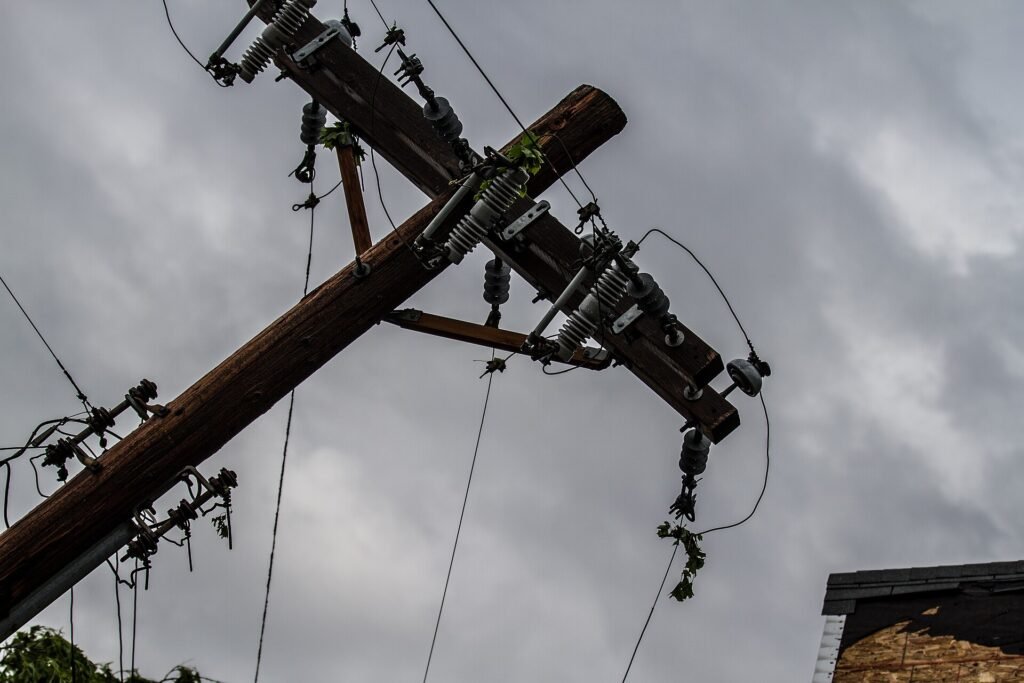
A home standby generator is a permanently installed, engine-driven generator that sits outside your house, runs on natural gas or propane, and starts on its own when utility power fails. An automatic transfer switch moves your circuits to the generator within seconds and back again when power returns, so you do not have to be home.
This guide explains how standby units differ from portable generators, how an electrician sizes and connects one, which fuel makes sense, and the carbon monoxide rules that apply to every engine-driven generator. Because the job touches your electrical service, gas piping, and permits, it is worth reading our main guide on how to hire an electrician before you request bids.
What is the difference between a standby and a portable generator?
A portable generator is a gasoline-powered (sometimes dual-fuel) unit you roll outside, start by hand, and connect with cords or a power inlet. It is cheaper and flexible, but someone has to set it up during the outage, refuel it, and keep it far from the house.
A standby generator is bolted to a pad outside, wired to your electrical system, and connected to your gas or propane supply. The U.S. Department of Energy’s Building America Solution Center describes these permanent units as able to handle whole-house power needs and notes they are common in rural homes.
| Feature | Portable generator | Home standby generator |
|---|---|---|
| Start-up | Manual, you start and connect it | Automatic when utility power fails |
| Typical fuel | Gasoline, some dual-fuel | Natural gas or liquid propane |
| Connection | Cords, or an inlet with a transfer switch or interlock | Hard-wired through a transfer switch |
| Coverage | Selected circuits | Selected circuits or the whole house, depending on size |
| Installation | Inlet and switch by an electrician | Electrician, gas work, pad, permits |
How do you size a home standby generator?
Sizing starts with a decision, not a formula: do you want to back up the whole house or only essential circuits? Essentials usually include the furnace blower or boiler, refrigerator, sump pump, well pump, some lights, and a few outlets. Central air conditioning and electric ranges or water heaters add a lot of load.
An electrician then looks at the actual loads in your panel. Motors in air conditioners, well pumps, and sump pumps draw much more current for a moment when they start than when they run, and the generator has to handle that surge. Generac, a major manufacturer, says there is no one-size answer and recommends an in-home evaluation by a dealer.
- Whole-house coverage: a larger unit, often paired with load-management modules that shed big appliances when the generator is near its limit.
- Essential-circuits coverage: a smaller unit feeding a separate subpanel or selected circuits through the transfer switch.
- Panel condition: an old or full panel may need work first. Our electrical panel upgrade guide covers the warning signs.
Ask each bidder to show the load list they used. Two quotes with very different generator sizes usually mean they assumed different circuits, not that one is wrong.
Automatic transfer switch or interlock: what is the difference?
Any generator connected to house wiring must be isolated from the utility. Without that, power can flow backward through your service onto the lines (called backfeeding) and injure utility workers who think the lines are dead. The DOE Building America guidance lists three accepted ways to prevent backfeeding: a manual transfer switch, an interlock on the main panel, or a meter-socket transfer switch where the utility and local code allow it.
Automatic transfer switch (ATS)
An ATS is standard with a home standby generator. It watches utility voltage, signals the generator to start when power drops, switches the load once the generator is stable, and switches back after utility power returns. The generator then cools down and shuts off on its own.
Manual transfer switch or interlock
These are common with portable generators. An interlock is a mechanical plate on the panel cover that makes it impossible to turn on the generator breaker while the main breaker is on. It is inexpensive, but it must be made for your specific panel and accepted by your local inspector. You flip the breakers by hand during every outage.
Never plug a generator into a wall outlet or dryer receptacle with a “double male” cord. It bypasses every safety device and can backfeed the utility lines. Use a transfer switch or an approved interlock installed by a licensed electrician.
Should you choose natural gas or propane?
Residential standby generators run on natural gas or liquid propane. Generac notes that you pick one fuel when you buy the unit and that it draws from the home’s existing supply.
- Natural gas: no tank to refill, so run time is not limited by storage. The gas meter and piping must be large enough for the furnace, water heater, and generator at the same time, which the installer or gas utility needs to confirm.
- Propane: works where there is no gas main. Run time depends on tank size and how full it is when the outage starts. DOE guidance advises placing fuel tanks outdoors and planning for delivery truck access.
If you already have a propane tank for heat, ask whether it is large enough to run both the furnace and the generator through a multi-day outage.
How do you prevent carbon monoxide poisoning from a generator?
Every engine-driven generator makes carbon monoxide (CO), a colorless, odorless gas. The U.S. Consumer Product Safety Commission (CPSC) generator safety sheet says more than 80 consumers die each year from CO poisoning caused by portable generators. For portable units, CPSC says to run them outside only, at least 20 feet from the house, with the exhaust pointed away from the home.
Standby generators are not exempt. In a 2025 CPSC staff report on stationary generators, staff described homes around New Orleans after Hurricane Ida in 2021 where exhaust from standby generators got inside at dangerous levels. Staff identified 105 homes where the standby generator was the CO source and found exhaust traveling at least 25 feet from the enclosure. The report concluded that the 5-foot clearance to openings allowed by NFPA 37 was not enough to prevent CO from entering.
- Follow the manufacturer’s clearances as a minimum. Generac’s published clearance guidance, based on NFPA 37, calls for 5 feet from windows, doors, and vents and 3 feet at the front and ends, and notes that local codes take precedence.
- Ask the installer to keep the unit well away from bedroom windows, air intakes, and spots where exhaust can be trapped by walls, decks, or overhangs.
- Install CO alarms outside sleeping areas and on every floor, and test them monthly, as CPSC recommends.
If a CO alarm sounds during an outage, get everyone outside first, then call 911. Do not go back in to find the source.
Do you need a permit to install a standby generator?
In most places, yes. The electrical connection and transfer switch almost always need an electrical permit and inspection. The gas or propane line may need a separate plumbing or fuel-gas permit, and some towns also review the pad location for setbacks and noise. Homeowner associations may have their own rules.
The licensed contractor normally pulls the permits and schedules the inspections. Our guide to electrical permits and inspections explains what inspectors check and why a permitted job protects you when you sell or file an insurance claim.
What does a home standby generator cost?
Generac’s FAQ, checked in 2026, says its home backup generators start at just over $2,000 for the equipment. Installation is priced separately and varies with the transfer switch, wiring distance, gas or propane work, the pad, and permit fees. Because site conditions drive so much of the total, compare itemized written quotes rather than relying on a single average.
How do you maintain a standby generator?
A standby generator is an engine, and it needs routine service to start when you need it. Generac’s published schedule for its home standby units includes:
- A break-in oil and filter change after the first 25 hours of run time.
- Yearly maintenance every 100 hours or every year, whichever comes first.
- Schedule A service (oil, oil filter, air filter) every 200 hours or 2 years.
- Schedule B service every 400 hours or 4 years.
Units also run a short automatic exercise cycle on a set schedule to keep the engine lubricated and the battery charged. DOE guidance adds that you should keep weeds, grass, and debris clear of the enclosure. After a long outage, check the oil before the next storm, because run hours add up quickly.
Where can you find a licensed generator installer?
A standby generator combines electrical, fuel, and permit work, so choose a licensed electrician who installs these systems regularly and will pull the permits. Compare licensed electricians on your state’s top list (see how we rank electricians), or get 3 free quotes from local contractors and ask each one for a written load list and placement plan.


New York Electrician License and Permit Rules (2026)·
[…] heavy snow off Lakes Erie and Ontario, and long outages make standby power a common request. Our home standby generator guide explains sizing and permits, and you can compare New York electricians who install […]
Kentucky Electrician License and Permit Rules (2026)·
[…] take down lines for days, so many homeowners add a standby generator with a transfer switch. Our home standby generator guide explains sizing and permits, and you can compare Kentucky electricians who install […]
Minnesota Electrician License and Permit Rules (2026)·
[…] threaten pipes and heating, so standby generators and transfer switches are frequent requests. Our home standby generator guide covers sizing and permits, and you can compare Minnesota electricians who install […]
Michigan Electrician License, Permits and Code Guide·
[…] generator needs a permit, a transfer switch and a correctly sized connection to your panel. Our home standby generator guide covers sizing and fuel, and you can compare Michigan electricians who install […]