


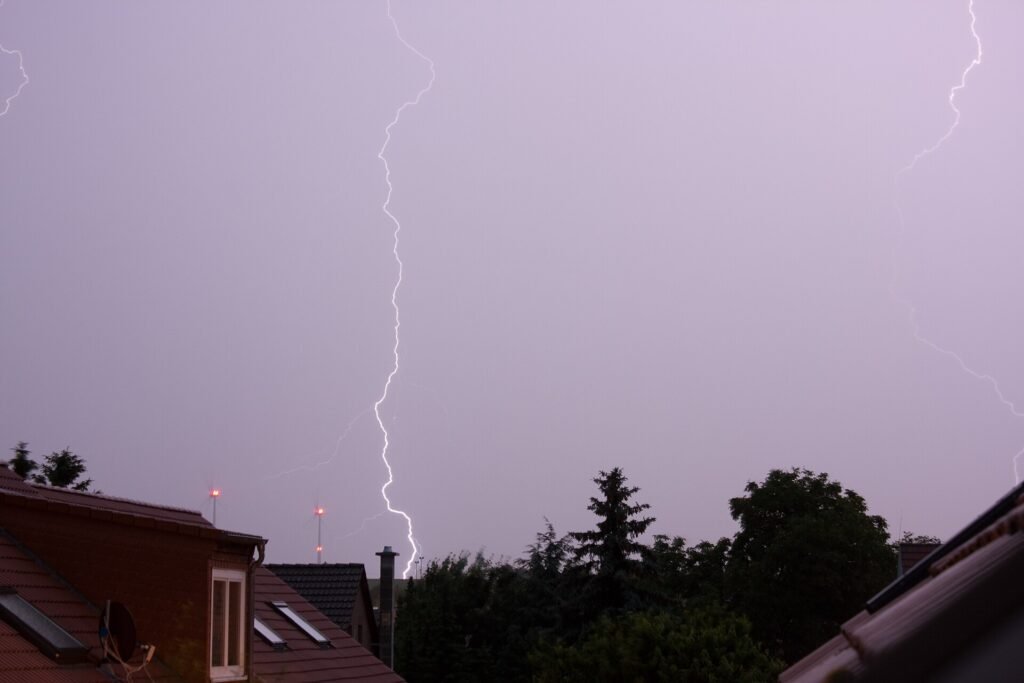
Whole-home surge protection is a surge protective device (SPD) installed at or right next to your main electrical panel that diverts large voltage spikes before they travel through your wiring. Under section 230.67 of the National Electrical Code (NEC), 2020 and later editions, new and replaced services supplying homes must include a Type 1 or Type 2 SPD.
This guide explains what the device does, what the code actually says, how Type 1 and Type 2 units differ, and why a panel SPD is only one layer of protection. If you are comparing contractors for this or a larger service job, our main guide on how to hire an electrician covers licensing, bids, and contracts.
What is a whole-home surge protector?
A surge is a very short voltage spike. A NIST guide for homeowners, Surges Happen!, explains that surges come from two main sources: lightning, either striking directly or inducing voltage in nearby lines, and switching, when loads turn on and off inside your home or during normal utility operations.
A whole-home SPD is a small unit wired to the service panel, either as a box mounted beside it or as a device that plugs into breaker spaces. When voltage jumps, it conducts the excess energy to ground so less of it reaches your appliances. Many units have indicator lights that show whether protection is still active.
Modern homes are full of electronics: control boards in furnaces, refrigerators, washers, LED lighting, and smart thermostats. That is a big part of why the code added surge protection at the service.
Does the NEC require whole-home surge protection?
Yes, in jurisdictions that have adopted the 2020 NEC or a later edition. Section 230.67 was new in the 2020 code. As summarized by manufacturers Leviton and Schneider Electric, it says:
- (A) Surge-protective device: “All services supplying dwelling units shall be provided with a surge-protective device (SPD).”
- (B) Location: the SPD must be an integral part of the service equipment or located immediately adjacent to it.
- (C) Type: the SPD must be a Type 1 or Type 2 SPD.
- (D) Replacement: “Where service equipment is replaced, all of the requirements of this section shall apply.”
The replacement rule matters for existing homes. If you replace your main panel or service equipment, the new installation needs an SPD even though the house was built long before 2020. Our electrical panel upgrade guide explains when a service change makes sense.
What changed in the 2023 and 2026 NEC?
The 2023 NEC reworded 230.67(A) to list occupancies: dwelling units, dormitory units, guest rooms and suites of hotels and motels, and areas of nursing homes and limited-care facilities used only as patient sleeping rooms. It also added a ratings rule: SPDs must have a nominal discharge current rating (In) of not less than 10kA.
Leviton’s 2026 code summary states that the 2026 NEC extends the requirement to sleeping quarters in fire, police, ambulance, rescue, and ranger stations. For a single-family home, the core rule has stayed the same since 2020: a Type 1 or Type 2 SPD at the service.
States and cities adopt NEC editions on their own schedules, sometimes with local amendments. Ask your permit office or electrician which edition applies to your address. Our guide to electrical permits and inspections explains how adoption and enforcement work.
What is the difference between Type 1 and Type 2 SPDs?
SPD types describe where the device may be installed. Leviton’s product literature summarizes them this way:
| Type | Where it goes | What it mainly addresses |
|---|---|---|
| Type 1 | Between the utility transformer and the line side of the service equipment, or on the load side | External surges such as lightning and utility capacitor bank switching |
| Type 2 | Load side of the service equipment, such as in or beside the panel | Residual lightning energy, motor-driven surges, and other surges generated inside the building |
| Point-of-use (often called Type 3) | Plug-in strips and outlets near the equipment | Final layer for sensitive electronics; does not satisfy 230.67 |
Type 1 devices can also be used in Type 2 locations. For most homes, the electrician will choose a device listed for your panel brand and installation location, rated at least 10kA nominal discharge current where the 2023 or later code applies. Short, straight connection leads help the device work as intended, which is one reason manufacturers want it right at the panel.
What does whole-home surge protection not protect?
A panel SPD is valuable, but it is not a force field. The NIST guide answers the question “will a surge protector at the service entrance be enough for the whole house?” with two answers: yes for appliances connected only to power, and no for appliances connected to power and another system.
- Cable, phone, satellite, and antenna lines. TVs, modems, and computers also connect to communications wiring, and surges can enter that way. NIST calls these “two-link” appliances and recommends protection at the device that covers both connections.
- Direct lightning strikes. NIST notes that protecting the structure from a direct strike is the job of properly grounded lightning rods installed by professionals. Lightning rods protect the building from fire, but they do not stop surges in the wiring.
- Surges created inside the house. Switching surges from motors and appliances start on your own circuits. A panel device helps, but equipment far down a branch circuit benefits from a point-of-use protector.
- Outages, sags, and brownouts. An SPD limits spikes. It does not supply power during an outage or fix low voltage. For backup power during outages, you need a generator or battery system instead.
- Wear over time. NIST notes that surge protectors can degrade. Check the status light periodically, especially after a major storm, and replace the unit if it shows lost protection.
An SPD connects directly to your service panel. Installing or replacing one means working inside the panel, where the main lugs can stay energized even with the main breaker off. Have a licensed electrician do it, with a permit where required.
Is whole-home surge protection worth adding to an older home?
If your panel is being replaced, the question is settled: under 2020 and later codes, the SPD is required. If your service is not changing, adding one is optional, and the decision depends on how many electronics-heavy appliances you own, local lightning exposure, and whether your panel has space and a listed SPD available.
Adding an SPD is often a small job when an electrician is already at your panel for other work, such as an EV charger circuit or a generator transfer switch. We have not found an official source for typical installed prices, so ask for a written quote that names the device model, its Type, and its nominal discharge current rating.
How is a whole-home surge protector installed?
Installation is usually straightforward when the panel is in good shape. The electrician turns off power where possible, mounts the device in or beside the panel, connects it to a breaker or terminals as the manufacturer specifies, and bonds it to the grounding system. Leads are kept short and direct.
Before you schedule the work, it helps to know a few things:
- Panel space: breaker-style SPDs need open spaces in the panel. A full panel may need a side-mounted unit instead.
- Grounding: an SPD depends on a sound grounding and bonding system. The electrician should check it, especially in older homes.
- Listing: the device should be listed for the location and, for breaker-style units, made for your panel brand.
- Permit: many jurisdictions treat an SPD added to an existing panel as permitted electrical work. Your electrician should know the local rule.
How do you get whole-home surge protection installed?
Ask any electrician you contact whether the quote includes an SPD, which Type and rating they plan to use, and whether a permit will be pulled. Compare licensed electricians on your state’s top list (see how we rank electricians), or get 3 free quotes and compare the device specifications side by side.


Ohio Electrician License, Permits and Code Rules 2026·
[…] lightning is a common reason Ohio owners ask about whole-home surge protection, which installs at the panel and works alongside plug-in strips. You can compare Ohio electricians […]